
Dr. M. Elizabeth Thorpe returns to the project of exploring her faith through rhetoric.
Transcript
Hello and welcome to The Priest and the Prof. I am your host, Dr. M. Elizabeth Thorpe. My producer. Carl and I would like to welcome you to a discussion about what it means to be a Christian in the 21st century. This podcast is a product of Trinity Episcopal Church in Greece, New York. I’ve been a rhetoric professor since 2010 and Carl has been working in church communications since 2022. And so join us as we explore the intersections of faith, community, politics, philosophy, and action.
Hello, listeners.
As you heard, Rev. Deborah will no longer be a part of this podcast anymore because she has moved back to South Africa to be with family. However, it is our goal to keep bringing you content. We will be still be exploring the kinds of challenging issues of the faith and the social world we always have, but we will be inviting guests such as faith and intellectual leaders, and of course Carl and I will be here for you as well. We will lead you through this transition until there is a new priest at Trinity who will be our new partner in this endeavor.
In the meantime, we’d love to hear from you! If you have ideas for content, topics, or just want to tell us how you are feeling about this new era of the podcast, feel free to reach out to me at elizabeth@priestandprof.org.
Thanks for sticking with us, and let us know what you are thinking!
A few weeks ago I shared with you how I see my faith and my intellectual life intersecting. However, when I did so, I focused pretty much entirely on ancient and classical theorists. A listener reached out to me and said he really enjoyed it, which I appreciated. But, he said, he’d be interested to hear if there were any current, or at least somewhat more modern applications.
I was kind of struck by this.
What he was asking was are there later theorists, post-Classical, who can help me understand my faith.
And I thought that was a great question, and worth thinking about. So today I’m returning to that same topic, but with a different angle – who are the people who can help me make sense of my faith beyond the Classical period?
It’s actually a very interesting question because, as it may not surprise anyone, the farther you go in ANY field’s train of reasoning, the farther AWAY from Christianity you get. Science, the humanities, logic…they are all comfortably nestled in the Church in the Middle Ages, but starting in the Renaissance there is some pull. And then in the Enlightenment the way we think about things starts separating from Christianity. There is a greater emphasis on rationality and human reason and progress. That lasts for a long time, until we get to the 20th century and then all bets are off and we reject it all – God, science, capitalism, the whole shebang.
So looking at my faith through more modern lenses is tricky. Because modern theory would generally tell me to reject it. So, here again, I admittedly am being creative, and possibly cherry-picking. But I guess we do what we need to to make the world make sense.
The first person I want to tell you about is Kenneth Burke. I’ve mentioned him before, but now you’re going to get an earful. I’m not actually Burke’s biggest fan. Not because he wasn’t important or revelatory. On the contrary – he was both. But I get annoyed with him because he is the lazy man’s rhetorician.
What I mean by that, is if a reviewer or critic feels like they need to comment on something or critique something, but they don’t actually have anything to say, they’ll refer you to Burke. That’s BECAUSE Burke is so important and revelatory. Whatever you’re doing, Burke is probably relevant. Which means he may or may not be helpful because he’s so ubiquitous. And in the 1950s and 60s when Burke was writing his ideas were like a Kuhnian shift. And when you explain to undergrads the difference between Aristotle and Burke they tend to see why.
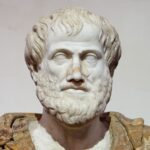
So let me go back to Aristotle for a second so you can get the big picture. Aristotle was the first to kind of systemetize rhetoric, which he pretty much defined as the ability to persuade. He came up with the basic format and formula we were all taught all throughout school that, based on the comments section of anything online, we have all definitely ignored. But from Aristotle we get the idea that an argument should be a claim, followed by evidence of a variety of types, then a summed up conclusion. Cicero came along and kind of perfected this, but let’s stay with Aristotle. Basically, Aristotle set up the parameters for rational, civil, argumentation and established the basic groundwork for persuasion in the public sphere.
Consider the assumptions here, however: If you believe that a rational argument is persuasive, you are assuming that your audience is rational. If you are setting up the rules for argumentation and they are civil and reasonable, you are assuming those characteristics of your audience. Here again – see the comments section.
Now, when I explain this, my students generally laugh. Because in no way do they assume the general public is rational (no word on what that means for their classmates). But then when I ask them what that means for how to make an argument and whether reason and logic are really all that helpful for motivating, it gets eerily quiet.
Enter Burke.
Kenneth Burke was basically responding to World War II in most of his work. What I mean by that, is he looked at a world in which a couple of guys took center stage and said, “Hey, it would be a great idea if we took over the world and killed millions of people in the process!” and people found that compelling and wondered how on earth did that happen? How did we get to a place where global domination and the holocaust seemed like the reasonable thing to do?
Burke’s conclusion was that it had nothing to do with reason – and everything to do with identity. Rhetoric, Burke posited, was not a matter of a rational speaker convincing people with evidence. Rhetoric was a person creating a sense of identification or division with a community. Hitler wasn’t a successful speaker because he was reasonable, he was a successful speaker because he convinced people that he got them. He understood them. He was ONE of them. And he was able to effectively identify who was NOT them, as well. It had nothing to do with making a rational argument, and everything to do with creating senses of unity with one group, and marginalizing others. And it’s easy to point to the marginalization part – that’s obvious. But in many ways the identification part – the part where he convinced all Germans that they were in it together and he was one of them, making Germany great like Germany was supposed to be, is more important. Because division isn’t helpful unless you have a strong sense of identity to divide from.
Some of you may see where I’m going already, but I’m going to elaborate. I’ve been thinking about the notions of identification and division in terms of my faith and it’s actually pretty profound.
When I was young I liked this song by a Christian artist called Steve Camp called “Don’t Tell Them Jesus Loves Them.” The title is misleading. The whole chorus is, “Don’t tell them Jesus loves them until you’re ready to love them, too.” That was a powerful message for me when I was a teen. I thought long and hard about what it meant to tell someone about my faith, as I actually did relatively often, from the perspective not just of someone who proselytized, but from the perspective of someone who cared. That made a difference in how I approached things. But as powerful as that message is, I think it only goes about ¾ of the way there. And this is where Burke helps me make sense of things.
Burke doesn’t say you should like or love your audience, Burke says you should BE ALIKE or BE ONE with your audience. You should find those things that you share and those commonalities and create a space where you understand each other and make community. THAT is how the faith grows. Not by preaching at people or testimonies. But by showing people that they are not outsiders. That they have community. That they will be a welcome part of the family.
The flipside of that is equally clear. There are churches and those in the faith that, instead of identification focus on division. There are churches that, instead of showing people that they are part of one community, are intent on showing certain people that they are outsiders, and creating animosity for those outsiders. This definitely helps create a sense of community for the insiders, but it is unstable and filled with strife.
Burke wrote about this extensively. And, as I note, it was literally a response to Hitler. There are those who include and those who exclude. Even if the stage is different, the messaging and the rhetoric is the same.
Okay – I’m about to get complicated. Later theory is. But I’m about to tell you a little bit about linguistics and semiotics. Hold onto your seats.
A French linguist called Ferdinand de Saussure once theorized that communication, specifically words, are made up of different elements. He called these things like sign and signified.
In 1923 Charles Ogden and I.A. Richards refined the model and created what they called the semiotic triangle. They said words are made up of three things: the referent, the symbol, and the thought. The referent is the thing itself. The symbol is the word. The thought is your idea about it. So if there is a dog, the referent is the animal itself, the symbol is d-o-g, and the thought is your association with that symbol that connects the symbol to the referent.
This sounds like a way to complicate what is pretty simple but it gives us a way to explain misunderstanding. When I say “dog” you’d think we’d have an understanding. However, that “thought” part makes a big difference. We might both hear the same word. We might both even see the same animal. But we might have very different associations with that referent. What if I’ve been bitten by a dog before? What if you are allergic to dogs? What if I was saved from a burning building by a rescue dog as a child? This is obviously a very silly example, but you can see how things like personal context can make even one simple word like “dog” have pretty different meanings for some people.
Now consider something much more complicated – like the church or faith. Let’s say the word is “Christ.” This presents a real problem for a lot of people. Because there is not a referent. That means there is not a “thing” or a an actual object, person, or whatever to attach a symbol or thought to. That’s what faith is We have symbols. We have thoughts and contexts. But we don’t have a referent. We, as people of faith, fill it in.
I think we need to be sensitive to the task that we may be asking of others when we demand that they adhere to, or even respect our beliefs. Because they are incomplete. The way we communicate to the world and understand the world doesn’t make sense. We are missing a part of the triangle that is required for a whole message. We need to acknowledge that is hard to overcome. Here again we have to consider what we have to offer. If we cannot offer radical peace, community, or love to make that empty referent seem sensible then it seems like we simply are incomplete.
Similarly, say the word is “church.” This presents an even bigger problem.Because many people DO have a referent for that. There is a notion, however vague, of what the church is. And we have a word. We have multiple words for church. But the thought can be nefarious. So many people have negative associations with the church. And we’ve done that to ourselves. For so many Americans the “church” sign is a close triangle. And it is a very negative one. Here again – the only way to change that is to address the “thought”. If the association between the word “church’ and the referent “church” isn’t community or love then we have lost the plot. We are not living out the message of Christ.
So this semiotic triangle may be a way to complicate simple things. But it is also a way to explain what should be obvious.
The least likely candidate for my rhetorical journey through my faith is with a French theorist named Michel Foucault.
Foucault was a post-structuralist and just kind of a weird dude. We don’t need to go into his personal life, but if you Google him, you’ll find out this this is a theoretically, politically, and personally odd choice. But Foucault is a bit like Burke in that he’s everywhere. When I was getting my MA in English we used to joke that if you didn’t have anything valuable to say you could just make something up and attribute it to Derrida or Foucault and nobody would know any better because nobody really understood them or had read them in grad school but we knew they were SUPER important, so, go for it. Derrida is less important in the field of communication, but Foucault is still a theoretical behemoth. Traditional, institutional folks who don’t see themselves as classicists tell you to cite Burke. Folks who see themselves as more transgressive or modern (but maybe still don’t have much specific to say) tell you to cite Foucault. That’s not to say these two are not useful! You can cite these two liberally, for sure. But they are definitely the lazy-scholar’s go-to.
So, what’s Foucault’s deal? It’s power.
Foucault doesn’t believe in truth – he believes in power. He actually has a very complex theory, so I am going to give you kind of the cartoon version of it, but it boils down to this: Our world is governed by various systems. Those systems are systems of power management. That means material power, political power, discursive power…all manner of power. Our lives are not governed necessarily by any kind of capital T truth or set system of morals (as we can see because those have definitely changed over time), but by those systems of power. Your life and existence is determined by your position in that system and your relationship to those systems of power. You don’t necessarily have a ton of choice in that, but that doesn’t mean you can’t try to change your position in that system.
Yeah, okay, what on earth does this have to do with me being a Christian? Because my relationship to the world, including my life in the faith, is determined by power.
Let me give you an example: There is a potent narrative among some Christians that American Christians are a terribly persecuted group and we need to be protected from the world and from and intrusive government. That is patently untrue and the people who are spinning that yarn are liars. White Christians are the most politically powerful group in America outside of the billionaire class. We basically define the discursive rules in America politically and legally. We ARE the system. And if you are sitting there shaking your head, telling yourself, oh, no, we have it so hard, I’m sorry, but you have been taken in BY that discourse of power. Christians have more power here than they know what to do with. And we need to acknowledge that. And, quite frankly, take care with it. And that is the thing that is missing from our politics. Foucault has described how truth is created by power. The Evangelical church IS the power in America – and it has spun a narrative that it is not. And as Christians we need to be very aware of our relationship to that power. We have power. And whether we like it our not, we wield it on a daily basis.
So go back to Burke – what do you do with your power? What is your part of the system? Do you divide or create identity?
There are also questions of how systems collide.The church is a system of power. The state is also a system of power. And the economy is a system of power. We need to be acutely aware of how all of these things intersect and OUR role in that. Because people are looking to us to define terms like truth, justice, etc. Because we ARE the systems of power.
Okay, I know that was heady, and a whole lot, but let me boil it down: Our society is defined less by immutable laws and more by who is in charge. Christians are very much in charge in America. We need to take great care with how we treat each other.
So what is the endgame, here?
I work in a world where faith is not exactly promoted. People in my world believe in proof, rationale, and reason. Even the ones who deal in things like postmodern theory, which seems so pie in the sky, demand that we show our work. So people are often very surprised to find I am involved in a church They are VERY surprised to find I am actually invested in it. And, I don’t think I have to explain my faith.
The whole point of faith is that it defies proof. People who demand proof of faith misunderstand what it is. And that is very frustrating for people like my colleagues. But that doesn’t mean I can’t explain my beliefs. It doesn’t mean that my thinking is inconsistent. It just means I have to take opportunities like this to explain myself.
Thank you for listening to the Priest and the Prof. Find us at our website, https://priestandprof.org. If you have any questions or concerns, feel free to contact us at podcast@priestandprof.org. Make sure to subscribe, and if you feel led, please leave a donation at https://priestandprof.org/donate/. That will help cover the costs of this podcast and support the ministries of Trinity Episcopal Church. Thank you, and we hope you have enjoyed our time together today.
Music by audionautix.com
Leave a Reply